The Observatory · Live NASA Feed
The real cosmos
No mock data. Everything below is pulled live from NASA's open APIs — the same sky the visitors crossed to find us.
Near-Earth Object Watch
Approaching Earth
| Object | Closest pass | Diameter | Velocity | Status |
|---|---|---|---|---|
| 2009 UD | 47.219 M km | ≈ 16 m | 45,585 km/h | nominal |
| 2019 UM8 | 61.975 M km | ≈ 9 m | 65,521 km/h | nominal |
| 2017 WK15 | 65.523 M km | ≈ 20 m | 61,044 km/h | nominal |
Footage from the void · NASA archive
Moving images of the abyss

Earth Views from the International Space Station
The International Space Station’s High Definition Earth Viewing (HDEV) experiment is an external camera platform located on the Columbus module of the space station. In addition to providing beautiful views of Earth, one
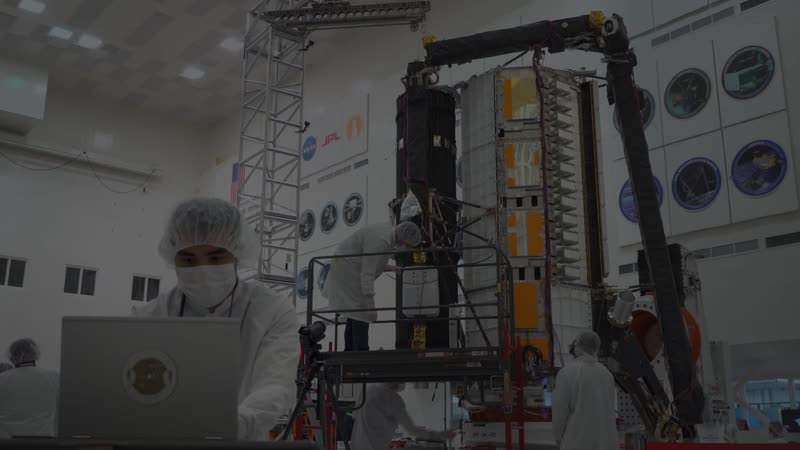
NISAR: Tracking Earth’s Changes From Space (Mission Overview)
NASA and ISRO (Indian Space Research Organisation) have teamed up to create a powerful new space mission that will track our changing Earth in fine detail. The satellite, called NISAR, will use an advanced radar system t
Deep field · NASA imagery
Where they come from

Festive Nebulas Light Up Milky Way Galaxy Satellite

Planetary Nebula NGC 7293 also Known as the Helix Nebula

Chasing Chickens in the Lambda Centauri Nebula

Into the Depths of the Lagoon Nebula

WISE Spies the Tarantula Nebula

Cygnus Loop Nebula
Imagery & data courtesy of NASA Open APIs · APOD · NeoWs · Image & Video Library